Welcome to Digital Doubles
What it still means to be the original
Digital Doubles explores what happens to the person a copy is made from, and what it still means to be the original.
The technologies to reproduce human identity are already here, but the social conventions, laws and expectations around them are still being formed. Questions of identity and personhood, once hypothetical, are becoming decisions we have to make.
Ethical tensions are often sensed before they can be named. Something feels uncanny, undignified or simply wrong long before the law finds the words. We believe that addressing a problem begins with making it visible, and that research, instead of only describing a problem, can materialise it as a performative, perceptive experience. That is why Digital Doubles takes the form of a museum rather than a report.
In the museum the data is tangible, and the contradictions are hard to overlook. Visitors are invited to take their time with these questions, to encounter them and feel their weight before thinking them through. Once felt, a tension can be recognised, discussed and acted upon.
The experience unfolds in three parts
The test. Before entering, you are invited to answer a few simple questions. Answer as yourself if it’s your first time experience with us.
The Museum of the Interim. Persons present at the arrival of AI. A collection of objects, laws, technologies, cases and gestures through which human replication is taking shape. Your answers shape your own route through it. The tower opens only after the test: show your card to enter.
The map. Here you can see who is acting on these questions: policymakers, artists, builders, institutions, and you among them. We are all implicated in these developments, but not equally empowered to shape them. The map is our own subjective, living view, with gaps left open on purpose. Find your location. Take action.
Digital Doubles was developed during the 2026 Ethics and Technology Practitioner Fellowship at Stanford’s McCoy Family Center for Ethics in Society. It was created by Maria Kuzmina and Marie Arkhipova, with research assistance by Janet (Jay) Li and Lidya Tewolde.
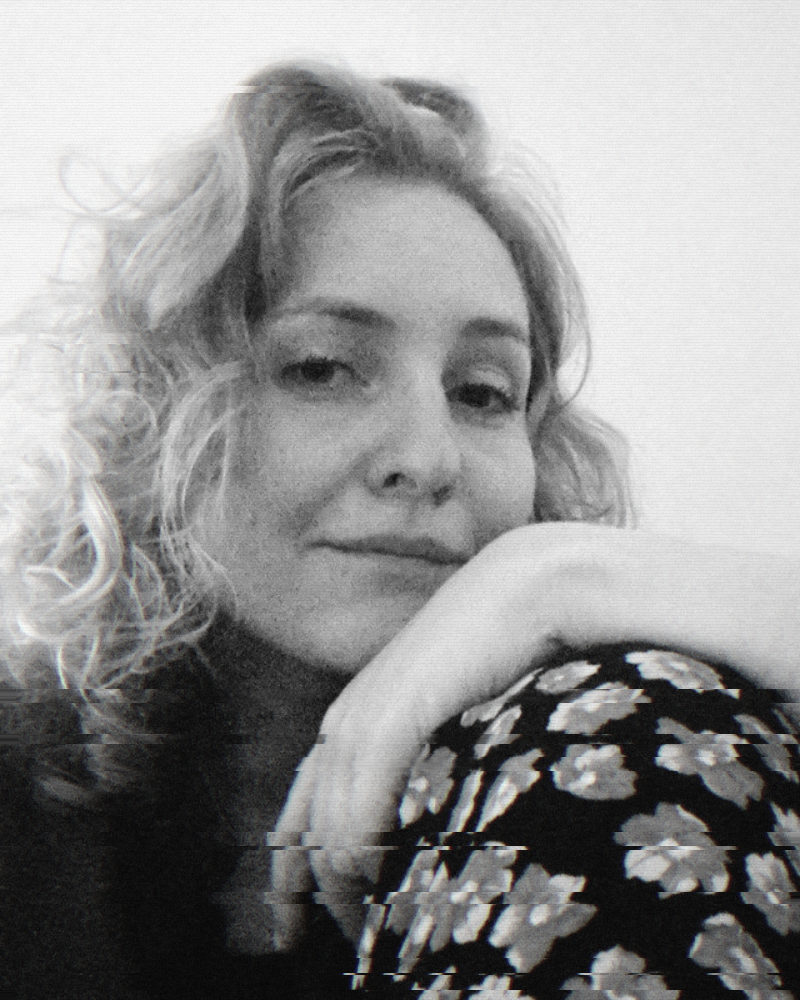
Maria Kuzmina works at the edge of law, culture and technology. She trained as an international lawyer in both common and civil law, is a member of the New York Bar, and has worked with private equity, venture capital and startups. She then spent a decade curating and creating programmes in technology-driven art, including at documenta and Ars Electronica, and advising NGOs and cultural institutions across Europe. Her work begins in the moments when the old rules no longer fit and new ones are not yet written: when communities need a say in policy, and experimental work needs funding. She is currently an Ethics and Technology Practitioner Fellow at Stanford’s McCoy Family Center for Ethics in Society.
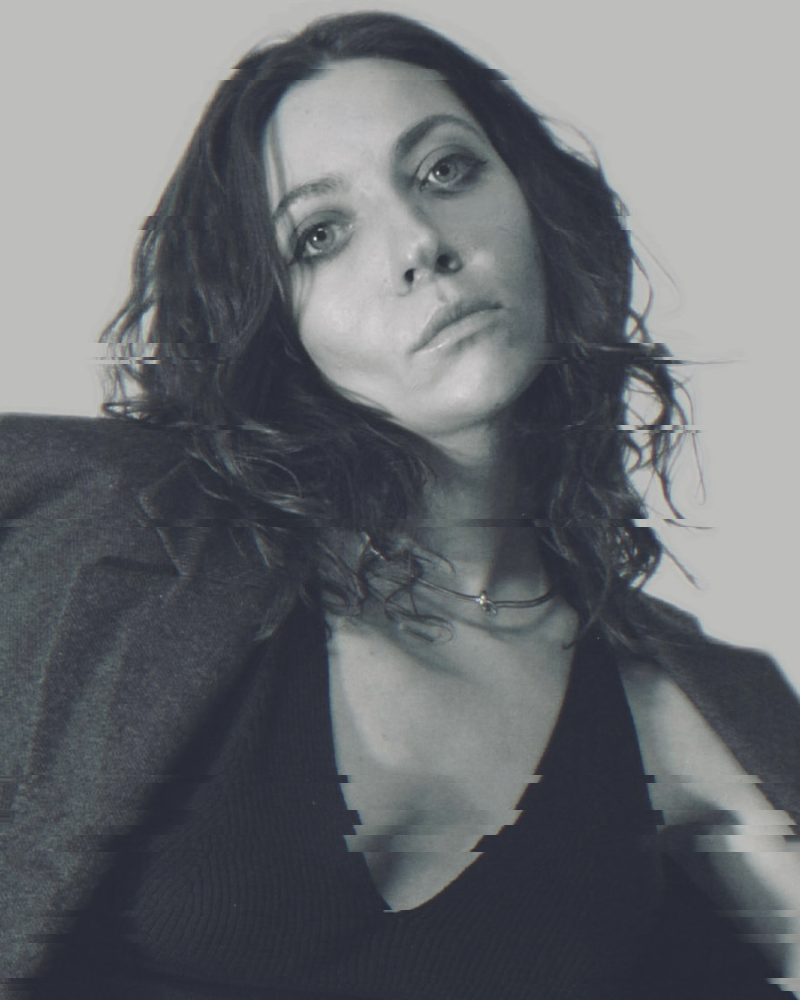
Marie Arkhipova is an artist, researcher and creative producer. Academically trained in monumental art, she began with large-scale mosaic and fresco projects. Today her practice moves between the physical and the digital, from hand-laid stone to 3D reconstruction, glitch, VR/AR and generative systems. Her work asks what happens to a person once they become data: how a face, a voice or a gesture can be broken into fragments, reassembled and reused, and who gets a say in it. She exhibits internationally in solo and group shows, and for many years has produced interactive installations and media environments for museums, public spaces and cultural institutions.
Your data
On the following pages, we will invite you to share something of yourself through your camera, microphone and keyboard. Each time, you decide whether to participate. If you decline, the site will offer placeholder data so you can continue the experience.
Use of AI
AI tools were used during the research and production of this project, including in the creation of some graphics and the drafting and editing of texts, which were subsequently reviewed and rewritten by the authors.
For this first presentation, however, we chose not to make AI replicas of ourselves. Perhaps that is where we draw the line.
If you would like to engage with us, reach out to us at hello@doubles.digital.